Artificial Intelligence Management
Artificial Intelligence Governance Framework
The Company has established a Responsible Artificial Intelligence Policy, aligned with the OECD AI Principles, and adopts the EU AI Act risk classification framework to conduct internal risk identification and tiered risk management. The policy clearly defines governance accountability, authorization boundaries, and human-in-the-loop (HITL) oversight mechanisms. It also specifies prohibited practices (such as social scoring and unauthorized biometric identification) and incorporates requirements for environmental performance across the supply chain. In addition, the Company ensures transparency and disclosure, implements bias monitoring mechanisms, and provides grievance and remediation channels for stakeholders, including complaint and review procedures. These measures collectively support the implementation of responsible AI governance across the entire lifecycle of AI systems.
Technical Controls and Model Maintenance
Access Control for Sensitive Functions
(Limiting access to sensitive AI capabilities (e.g. facial recognition, surveillance))
For high-risk artificial intelligence (AI) functions, a Sensitive Technology Access Review Mechanism is implemented. For the OPENPOINT customer recommendation system, API key lifecycle management and multi-factor authentication (MFA) are adopted. Standardized controls require that AI bots and the OPENPOINT APP AI customer service system use PAM two-step authentication. GKE keys are managed by PIC INFRA and secured through Service Account (SA) permission binding to prevent key leakage. In addition, all operations must be conducted through the PAM session recording platform to ensure traceability of activities. The Company has also established a proactive anomaly login alert mechanism, with designated personnel performing regular review of audit logs.
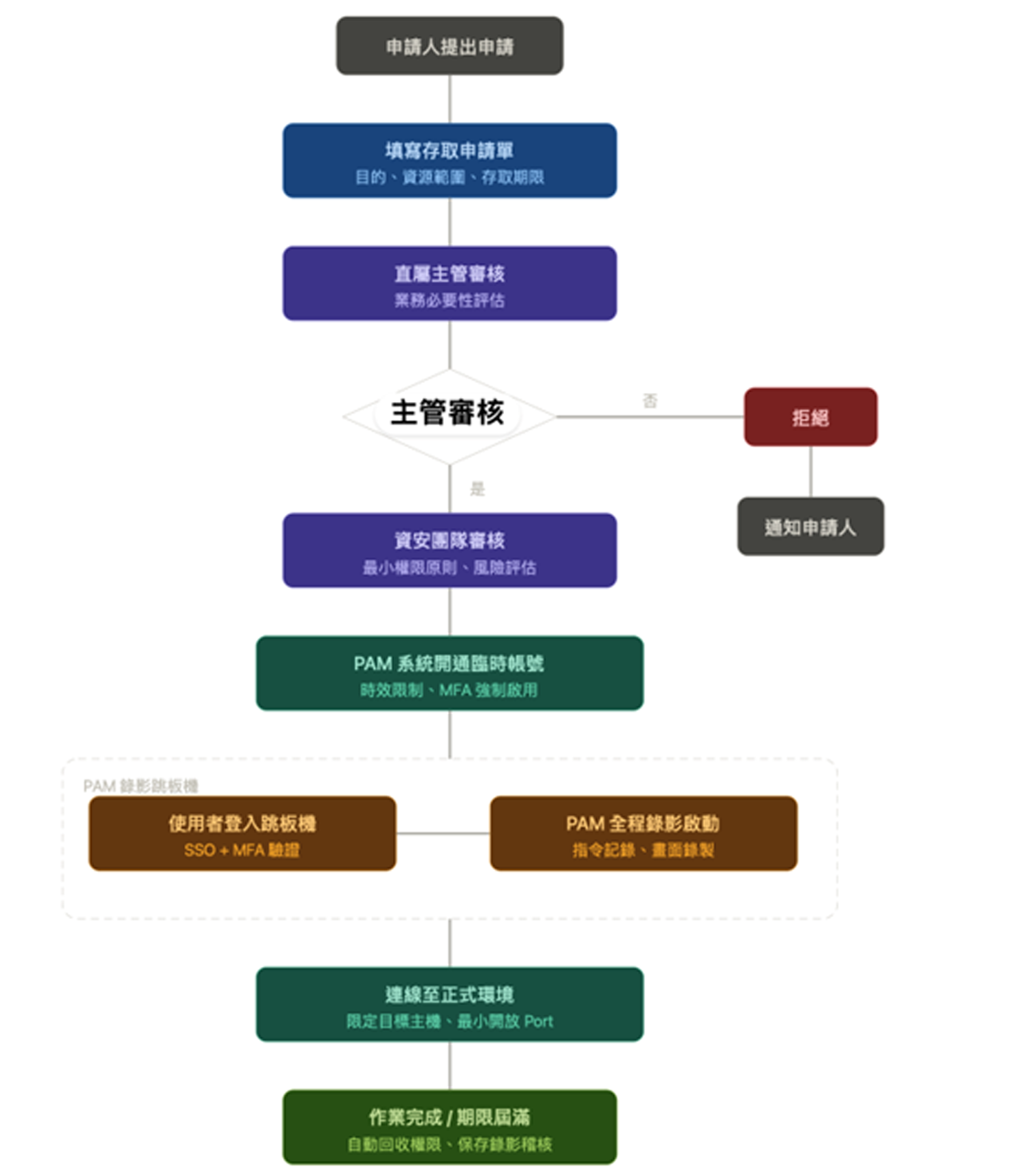
PAM Account Approval Workflow Diagram

PAM Two-Step Authentication
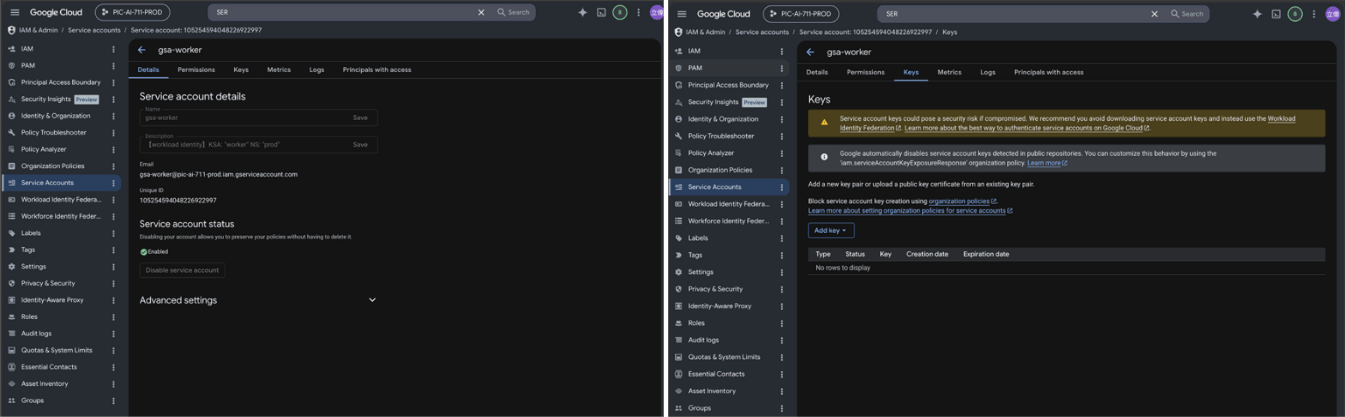
GKE Key Illustration
Continuous Model Performance Monitoring
(Mechanisms to detect and correct drift or degradation of AI models over time)
A continuous monitoring mechanism has been established for the OPENPOINT AI food recommendation system and the Xstore unmanned store system. When model drift exceeds the defined threshold, automated retraining or manual parameter adjustments are immediately triggered to ensure model performance is restored to baseline levels.
Green AI Compute Optimization Initiative
(Initiatives (own/with suppliers) to lower the ecological footprint of AI data centers/models)
The Company has launched a “Green AI Compute Optimization Initiative,” adopting data centers with low ecological footprint and verified carbon emission credentials. Through model quantization and distributed computing, energy consumption is reduced. An autoscaling mechanism is implemented to maintain GPU utilization above 70%, with an expected annual reduction of 15% in electricity waste, supporting net-zero sustainability goals.
Transparency and Fairness
Transparency of AI-Generated Content
(Distinct labeling of AI-generated content and outcomes of AI-driven decisions)
The Company promotes an “AI-Generated Labeling Initiative,” under which all marketing content and customer service responses are clearly labeled as “AI-assisted content” in prominent positions on user interfaces, ensuring that users are aware when they are interacting with AI rather than a human. Digital content incorporates invisible watermarks, while generated images adopt metadata tagging and SynthID digital watermarking technologies for authenticity verification. AI-generated responses also provide source links to support user verification of information, enhancing transparency and explainability of AI-generated outputs and ensuring accountability.

SynthID Digital Watermarking
Fairness and Bias Assessment
(Regular assessments of deployed AI models for fairness/bias)
Annual fairness audits are conducted for customer service and workplace assistant AI systems. Statistical methods are applied across dimensions including demographics, socioeconomic status, and behavioral patterns to validate AI outputs, ensuring no significant statistical bias or discrimination across different groups and upholding fairness in artificial intelligence.
Human Oversight and Grievance Mechanism
AI Decision Appeal Channel
(Appeals process for users/affected third parties to contest an AI decision or outcome)
The Company has established an “AI Decision Appeal Channel” on its official app and website. Reported cases are reviewed and responded to by authorized personnel within seven working days. When AI systems fail to resolve an issue after two consecutive attempts, or when high-risk keywords such as customer complaints, violence, or self-harm are detected, alerts are immediately triggered and escalation to human intervention is initiated to ensure adequate protection of user rights. All complaints and feedback are incorporated into case closure reviews and serve as a basis for continuous improvement.
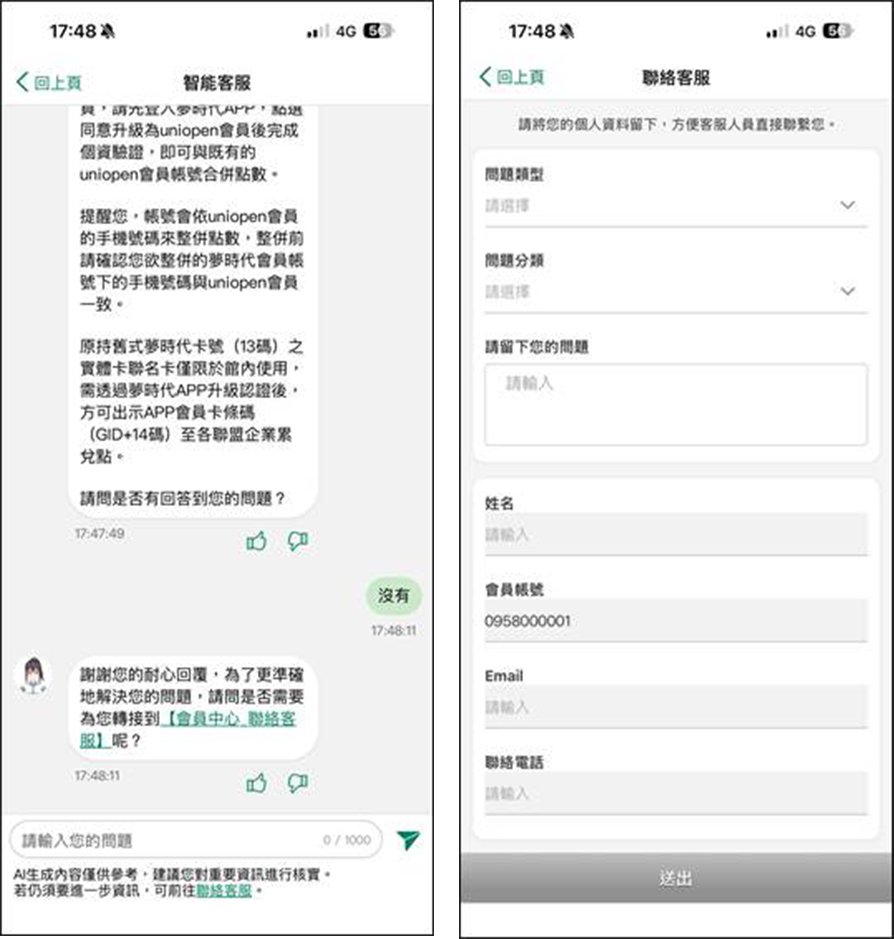
AI Decision Appeal Illustration
Quantified Sustainability Contribution Outcomes
(Quantification of the impact of AI initiatives/tools on sustainability outcomes)
President Chain Store Corporation has established an “AI Sustainability Contribution Quantification Model” to make visible the improvements in service efficiency and environmental sustainability generated by AI applications. In terms of customer service transformation, AI-powered customer service effectively handles a large volume of repetitive inquiries, significantly reducing the workload of human agents and enabling them to focus on higher-value and more complex cases. From an environmental perspective, digital interactions replace paper-based processes, supporting energy conservation and carbon reduction goals and contributing to the Company’s net-zero pathway. The specific results are shown in the table below.
| Dimension |
KPI |
Quantified Results |
| Service Efficiency |
Proportion of inquiries handled by AI customer service |
80% - 90% |
| Workforce Optimization |
Reduction in cases handled by human agents |
30% - 50% |
| Reduction in repetitive customer service calls per month |
15% - 20% |
| Environmental Sustainability |
Annual paper reduction through digital interactions |
Over 500 sheets |
| Annual carbon reduction through digital interactions |
Approximately 2~3 tons |
Ethics and AI Literacy Training Program
AI Talent Cultivation Training Program
(Training of employees on the ethical use and/or security of AI)
The Company has implemented a “AI Talent Cultivation Training Program” throughout the year, progressively strengthening capabilities from data privacy and cybersecurity to ethical literacy and practical tool application, thereby fostering an enterprise-wide AI literacy culture. Training participants include senior and middle management, all employees, and frontline store staff. Through tailored course design, personnel at different levels are equipped with the corresponding knowledge and operational capabilities. At the store level, hands-on training is delivered through the “Smart Operations Lab,” where staff learn to operate AI ordering systems, embedding AI literacy into daily operations. The training outcomes for 2025 are presented in the table below.
| Training Category |
Target Audience |
Number of Participants Completed |
| Data Privacy and Cybersecurity |
All employees |
2,044 |
| AI Ethics Literacy |
Senior and middle management |
57 |
| Digital Tools and AI Literacy |
All employees |
11,030 |
| AI Ordering System Practical Training |
Store staff |
1,539 |